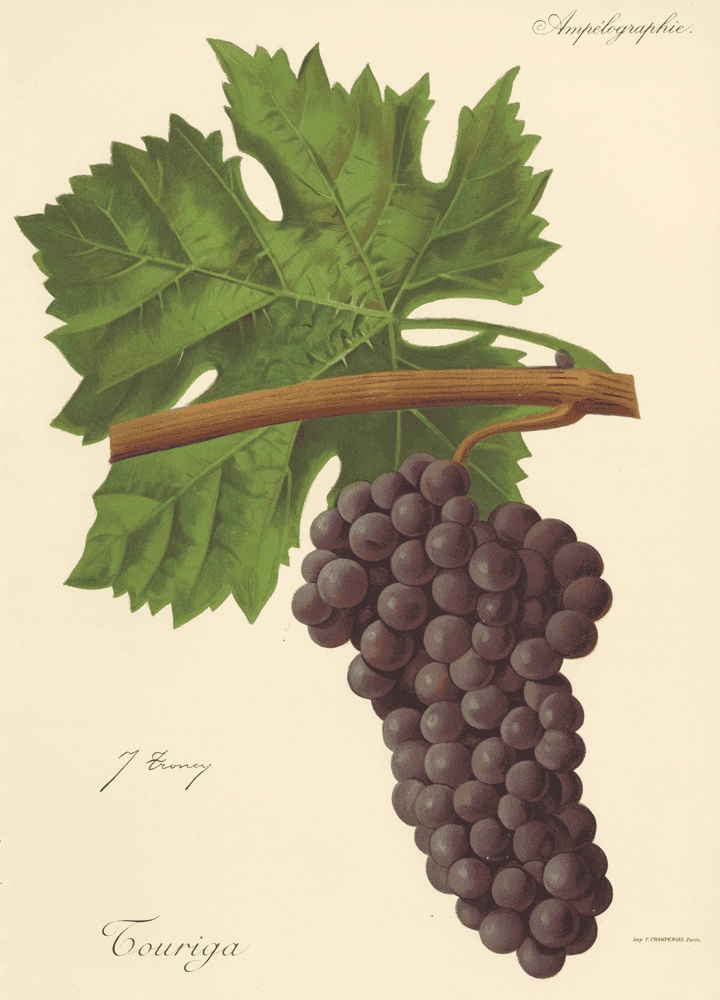
Touriga Nacional is Portugal’s most celebrated native red grape — aromatic, structured, and capable of producing some of the country’s finest wines. Once best known as a component in blends (particularly for Port and traditional field wines), it is now increasingly bottled on its own, revealing a depth and finesse that place it among Europe’s great red varieties.
This guide explores the grape’s origins, flavour profile, where it thrives — including the Alentejo — and why it has emerged as a confident modern single-varietal wine.
Origins and character
This Portuguese native is prized for its small berries, thick skins, and naturally low yields. These traits give wines deep colour, aromatic intensity, and firm yet refined tannins.
Historically, those same qualities made it invaluable as a blending component. It brought structure, perfume, and longevity to wines, but was rarely asked to stand alone — not because of any lack of quality, but because it was considered too precious and too low-yielding to dominate a bottle by itself.
From supporting role to centre stage
For much of its history, the variety was planted alongside other local grapes and harvested together, contributing depth and intensity to blends from regions such as the Douro and Dão.
That approach has shifted.
Advances in viticulture, deliberate yield control, and more precise winemaking have shown that this grape can produce complete, expressive wines on its own — particularly in warmer regions where full ripeness is more easily achieved.
This change isn’t about fashion. It’s about finally letting a great variety speak clearly in its own voice.
A natural fit for the Alentejo
In the Alentejo, the grape has found a particularly convincing modern expression.
The region’s warm, dry summers help ensure full phenolic ripeness, while cooler nights preserve aromatic freshness. Poor, well-drained soils naturally limit vigour, keeping yields in check.
Many Alentejo producers work with restraint, avoiding excessive oak or extraction. The aim is to allow perfume, texture, and balance to take centre stage, rather than sheer power.
The result is a style that feels generous yet composed — powerful without heaviness.
How it tastes
Wines made from this variety are known for their aromatic lift and structured palate.
Typical notes include:
- Violet and wildflowers
- Blackcurrant, blackberry, and dark cherry
- Fresh herbs and hints of bergamot
- Fine-grained tannins and a long, savoury finish
Despite their depth, the best examples are never rustic. They combine concentration with clarity and freshness.
Is it a safe choice?
For drinkers who enjoy structured European reds but want to move beyond familiar international varieties, the answer is yes.
It tends to appeal to those who already enjoy:
- Cabernet Sauvignon, for its structure
- Syrah, for perfume and spice
- Nebbiolo, for tannin and elegance — without the austerity
As a single varietal, it offers something distinctive without being challenging: a confident step into unfamiliar territory.
Winemaking approach
Modern examples are typically made as dry red wines, fermented in stainless steel or concrete and aged in neutral or lightly toasted oak.
The goal is to frame the fruit and aromatics rather than dominate them. Excessive oak can easily mask the grape’s natural floral character, so balance is key.
Food pairings
Thanks to its structure and aromatic complexity, this is a natural partner for food.
It works particularly well with:
- Grilled or roasted lamb
- Beef with herbs
- Game birds
- Hard, aged cheeses
Mediterranean flavours suit it well, making it an easy match for regional cuisine from southern Portugal.
Why it matters now
The rise of single-varietal bottlings reflects a broader shift in Portuguese wine: growing confidence in native grapes, less reliance on international varieties, and a renewed focus on place and identity.
What was once a supporting player is now recognised as a leading actor — not because it has changed, but because winemakers have learned how best to work with it.
At a glance
- Grape: Touriga Nacional
- Country: Portugal
- Key regions: Douro, Dão, Alentejo
- Style: Dry red
- Character: Floral, structured, elegant
In short
Portugal’s noble red grape has moved from strengthening blends to standing confidently on its own. In regions such as the Alentejo, it produces expressive, balanced wines that reward curiosity without demanding compromise.
You can buy a wonderful example of Touriga Nacional at our online shop.
Explore More Grape Guides
- Malvazija: Four Countries, One Vineyard

- Teran: The grape Europe fought over

- Vrachanski Misket: The Dictator’s Favourite Grape That Refused to Disappear

- Rubin: The Bulgarian Grape That Waited for the World to Catch Up

- Vrachanski Misket: Bulgaria’s aromatic original

- How Gouveio brings balance to Alentejo white wine

- Ranfol: The Slovenian wine grape you’re meant to overlook

- Tinta Barroca: Portugal’s unsung blending grape

- Discover Touriga Nacional: Portugal’s celebrated red wine grape
