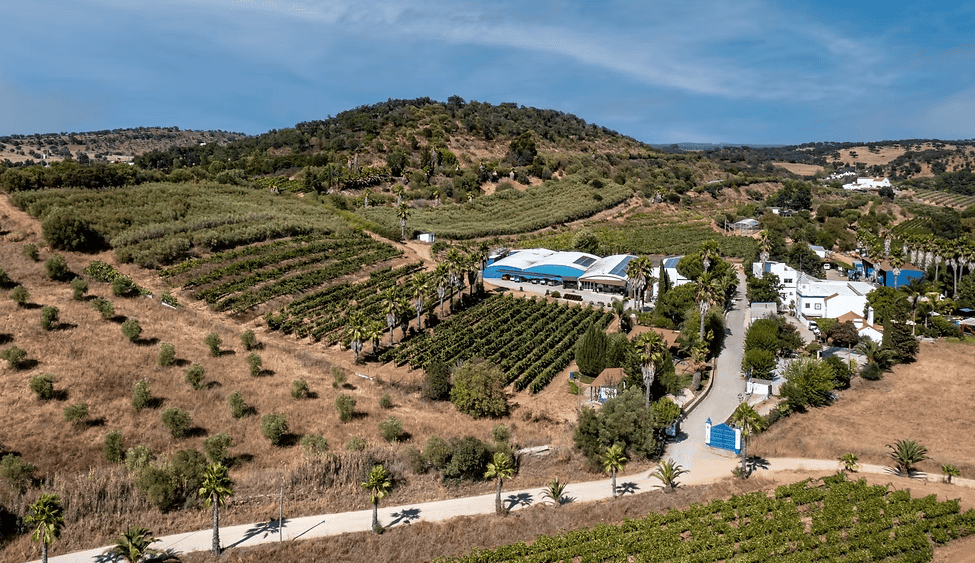
Image: the vineyards of Quinta da Plansel in Alentejo, Portugal. You can try their wines here.
Once closely associated with the Douro, Gouveio is now planted right across Portugal. In recent years, it has become particularly popular in warmer regions such as Alentejo, where it brings freshness, body, and balance to modern white wines.
With around 1,200 hectares under vine across Portugal, Gouveio remains a relatively small but important part of the country’s vineyard landscape. Its appeal lies in its versatility. It ripens early, delivers reliable yields, and produces wines that combine energy with structure.
What is the Gouveio grape?
Gouveio is a native Portuguese white grape variety known for producing fresh, lively wines with good acidity and plenty of body. Although it was long called Verdelho in the Douro Valley, it has no genetic connection to the Verdelho grape of Madeira. That historical misnaming caused confusion, but modern producers now clearly identify it as Gouveio.
The grape ripens relatively early and produces medium-sized, tightly packed bunches of small, yellow-green grapes. These clusters can be prone to oidium and are vulnerable if rain falls near harvest, which makes careful vineyard management essential.
How does Gouveio grow?
It performs well in warm, inland regions. It delivers high yields and retains acidity even in hot conditions. This combination explains its growing popularity in Alentejo, where producers increasingly seek native grapes that can handle heat without sacrificing freshness.
Because it ripens early, growers can harvest before peak heat or autumn rain, helping preserve balance in the finished wine.
What does the wine taste like?
Gouveio produces wines that feel fresh, balanced, and structured, rather than overtly aromatic.
Typical flavour and aroma characteristics include:
- Citrus and lemon peel
- Peach and stone fruit
- Subtle aniseed notes
- Occasional exotic fruit, including banana, passion fruit, and mango
- A clean, lively finish
These wines combine brightness with body. They feel energetic when young, yet they also age well in bottle, developing complexity over time.
Is Gouveio used in blends?
Yes. Gouveio most often appears in blends, where it plays a structural role.
Producers use it to:
- Add acidity and freshness
- Bring body without heaviness
- Balance riper or more aromatic varieties
In regions like Alentejo, it helps restrain sun-driven ripeness and creates white wines that feel modern, precise, and food-friendly.
Why it matters today
Gouveio offers exactly what Portuguese white wine increasingly needs: freshness, resilience, and balance. It thrives in warm regions, supports blends, and delivers wines with both immediate appeal and ageing potential.
For drinkers exploring Portuguese whites beyond the obvious names, Gouveio stands out as a grape that quietly does everything well — adaptable in the vineyard, dependable in the cellar, and convincing in the glass.
You can buy white Portuguese wine in our online shop.
Explore more Grape Guides
- Malvazija: Four Countries, One Vineyard
 If a Malvazija vine planted in Istria in 1915 survived until 1995, it could have changed nationality four times, witnessing empire, fascism, communism and democracy without ever leaving the same hillside overlooking the Adriatic.
 - Teran: The grape Europe fought over
 Nobody fights over grapes that do not matter.
 - Vrachanski Misket: The Dictator’s Favourite Grape That Refused to Disappear
 Vrachanski Misket is not an easy name to remember. Which makes its survival even more impressive.
 - Rubin: The Bulgarian Grape That Waited for the World to Catch Up
 Most grapes evolve over centuries. Rubin was designed for the future.
 - Vrachanski Misket: Bulgaria’s aromatic original
 Vrachanski Misket is one of Bulgaria’s most distinctive native white grapes.
 - How Gouveio brings balance to Alentejo white wine
 Image: the vineyards of Quinta da Plansel in Alentejo, Portugal. You can try their wines here. Once closely associated with the Douro, Gouveio is now… Read more: How Gouveio brings balance to Alentejo white wine
 - Ranfol: The Slovenian wine grape you’re meant to overlook
 Image: Hisa Joannes Protner’s organic vineyards in northern Slovenia. You can try their Ranfol here. Ranfol is best known as a blending grape, bringing freshness,… Read more: Ranfol: The Slovenian wine grape you’re meant to overlook
 - Tinta Barroca: Portugal’s unsung blending grape
 Valued for its colour, richness, and approachability, Tinta Barroca has traditionally been used as a blending grape, both in Port and in still red wines.… Read more: Tinta Barroca: Portugal’s unsung blending grape
 - Discover Touriga Nacional: Portugal’s celebrated red wine grape
 Touriga Nacional is Portugal’s most celebrated native red grape — aromatic, structured, and capable of producing some of the country’s finest wines. Once best known… Read more: Discover Touriga Nacional: Portugal’s celebrated red wine grape